
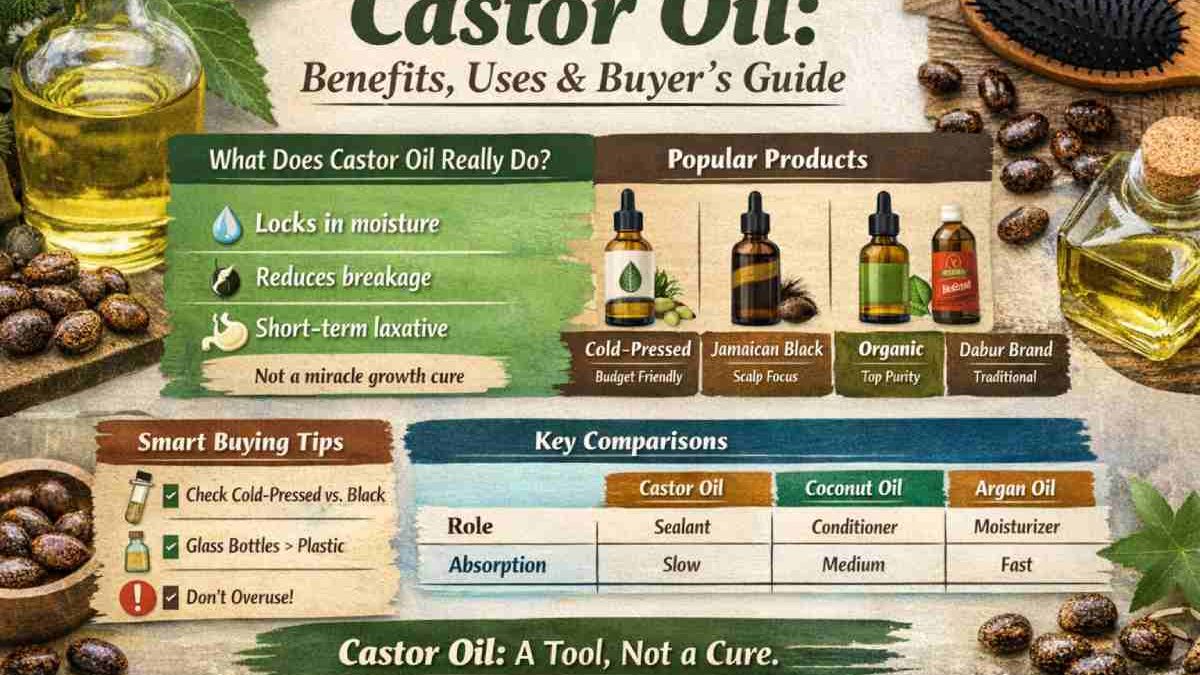
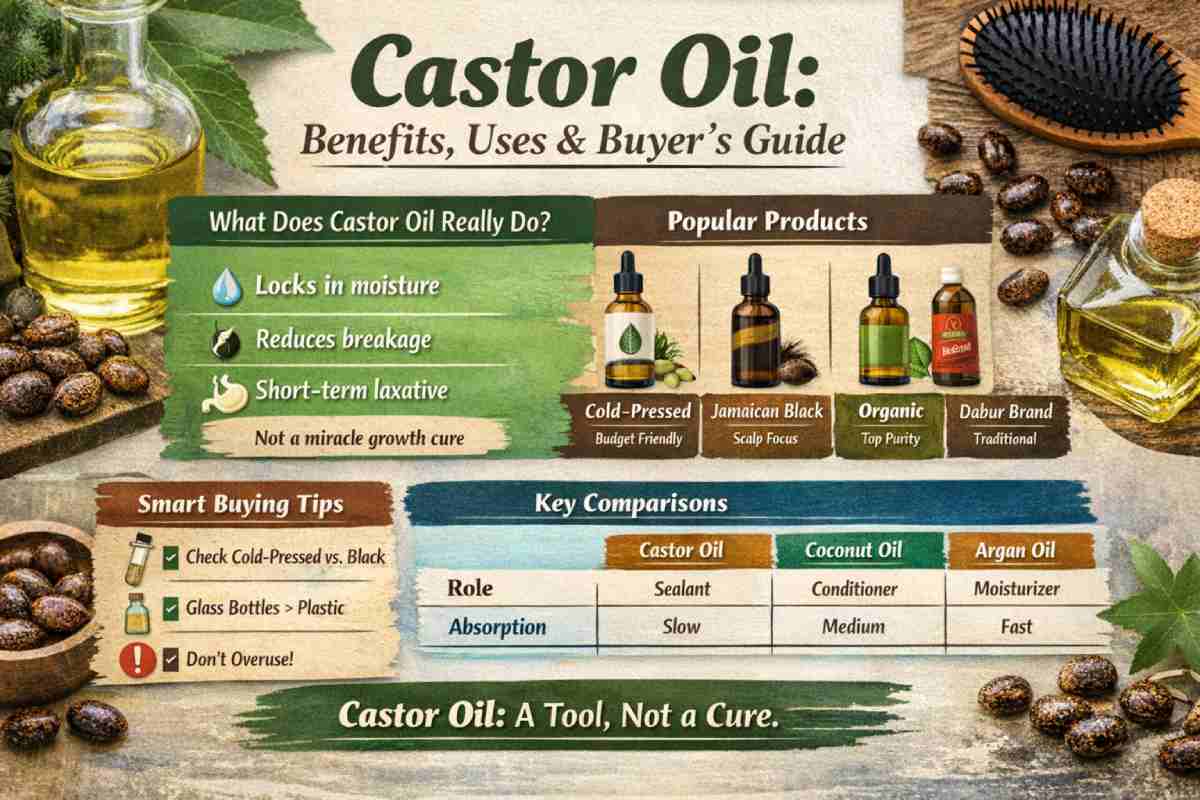
Castor oil is not a miracle solution—it is a targeted functional tool that delivers results only when used correctly for specific purposes like moisture sealing, hair retention, and short-term digestive relief.
Most people don’t fail with castor oil because it “doesn’t work.” They fail because they use it like a universal solution instead of a precision product. At the same time, the market is flooded with dozens of brands, price variations, and quality differences—making it harder to choose the right one.
This guide solves both problems:
- What castor oil actually does (science + reality)
- Which products are worth buying (with pricing and reviews)
- Where to buy (online and offline, across countries)
Table of Contents
What Is Castor Oil And What Makes It Different
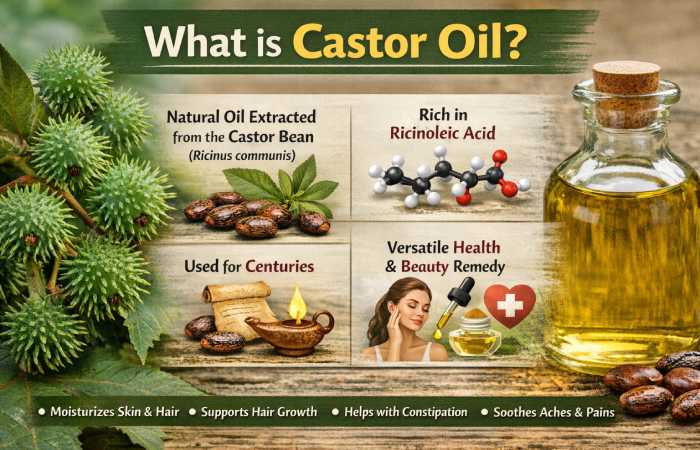
Castor oil is extracted from the seeds of the Ricinus communis. Its uniqueness comes from its high concentration of ricinoleic acid.
This composition gives castor oil:
- A very thick, slow-absorbing texture
- Strong moisture-locking (occlusive) properties
- Mild anti-inflammatory benefits
Unlike lighter oils that absorb quickly, castor oil forms a protective layer on the surface. That’s why it performs differently from oils like coconut or argan.
How Castor Oil Actually Works
Occlusion vs Hydration
Castor oil does not hydrate your skin or hair. It locks in existing moisture.
- Hydrators add water
- Occlusives prevent water loss
Castor oil is an occlusive.
Surface Effects vs Biological Effects
This is where most confusion happens.
Surface effects:
- Shinier hair
- Softer skin
- Fuller-looking brows
Biological effects:
- Limited direct impact on hair growth
- Mild support for inflammation
Most perceived benefits come from surface-level improvements, not deep biological changes.
Real Benefits of Castor Oil Ranked by Evidence
Digestive Relief
Castor oil is recognized by the U.S. Food and Drug Administration as a stimulant laxative for short-term relief of constipation.
What it does:
- Stimulates bowel movement within hours
Limitations:
- Not for daily use
- Overuse can cause dependency
Hair Health
Castor oil does not regrow hair or reverse alopecia.
What it actually does:
- Reduces breakage
- Improves hair flexibility
- Protects strands
Example:
If hair breakage decreases, hair appears thicker over time without actual growth increase.
Skin Barrier Support
Best for:
- Dry skin
- Cracked areas
- Night-time sealing
Limitations:
- Can clog pores
- Feels heavy in humid climates
Dermatology guidance from the American Academy of Dermatology supports selective use of occlusives.
Cosmetic Enhancement
Used for:
- Eyelashes
- Eyebrows
- Beard
Effects:
- Improves texture
- Makes hair appear fuller
Does not:
- Stimulate new hair growth
The Biggest Myths And Why They Persist
Myth 1: Castor Oil Grows Hair
Reality: It improves retention, not growth.
Myth 2: Natural Means Safe
Reality: It can still cause irritation or breakouts.
Myth 3: More Is Better
Reality: Overuse leads to buildup and reduced effectiveness.
These myths persist because castor oil produces quick visible results, which are often mistaken for long-term change.
Types of Castor Oil
| Type | Processing | Best Use | Limitation |
|---|---|---|---|
| Cold-Pressed | No heat | Skin and hair | Thick texture |
| Jamaican Black | Roasted seeds | Scalp use | Can be drying |
| Refined | Processed | Basic use | Lower nutrient retention |
There is no universally “best” type—only what fits your use case.
Best Castor Oil Products (India Market)
Recommended Options
- WishCare Cold-Pressed Castor Oil – affordable, beginner-friendly
- Juicy Chemistry Organic Castor Oil – premium, organic focus
- ThriveCo Jamaican Black Castor Oil – scalp-specific use
- Urban Botanics Castor Oil – budget option
- Dabur Castor Oil – widely available offline
Product Comparison Table
| Brand | Type | Price Range | Best For | Availability |
|---|---|---|---|---|
| WishCare | Cold-pressed | ₹100–₹200 | Beginners | Online |
| Juicy Chemistry | Organic | ₹300–₹700 | Sensitive skin | Online |
| ThriveCo | Jamaican Black | ₹300–₹600 | Hair care | Online |
| Urban Botanics | Cold-pressed | ₹150–₹300 | Budget use | Online |
| Dabur | Refined | ₹150–₹250 | General use | Online + Offline |
Pricing Breakdown
| Category | Price Range |
|---|---|
| Budget oils | ₹100 – ₹200 |
| Mid-range oils | ₹200 – ₹400 |
| Premium organic oils | ₹400 – ₹800 |
| Imported oils | ₹800 – ₹3000+ |
Higher pricing often reflects branding and certification—not always better performance.
Reviews and Real User Feedback
Common positives:
- Hair feels thicker
- Skin becomes softer
- Multipurpose usage
Common negatives:
- Sticky texture
- Difficult to wash
- No real hair regrowth
Typical user pattern:
Results are visible early but plateau over time.
Country-Wise Availability
| Country | Availability | Notes |
|---|---|---|
| India | High | Strong online and Ayurvedic presence |
| USA | High | Popular in organic and haircare markets |
| UK | High | Widely available in pharmacies |
| UAE | Medium | Mostly imported |
| Australia | Medium | Focus on organic stores |
Where to Buy (Online and Offline)
Online
- Amazon
- Flipkart
- Nykaa
- Tata 1mg
Advantages:
- Better variety
- Competitive pricing
- Reviews available
Offline
- Pharmacies
- Ayurvedic stores
- Organic product shops
Advantages:
- Immediate availability
- Trusted local brands
Castor Oil vs Other Oils
| Feature | Castor Oil | Coconut Oil | Argan Oil |
|---|---|---|---|
| Role | Sealant | Conditioner | Moisturizer |
| Texture | Very thick | Medium | Light |
| Absorption | Slow | Medium | Fast |
| Best Use | Targeted use | General hair care | Daily skincare |
Castor oil is not a replacement for other oils. It works best as part of a routine.
How to Choose the Right Castor Oil
Step 1: Define Your Goal
- Hair → Jamaican black
- Skin → Cold-pressed
- Budget → Standard oil
Step 2: Check Processing
| Type | Recommendation |
|---|---|
| Cold-pressed | Best choice |
| Organic | Optional |
| Refined | Basic use only |
Step 3: Packaging
- Glass bottles preferred
- Dropper bottles for ease of use
Strategic Usage Guide
Hair Routine
- Mix with lighter oil
- Apply 1–2 times weekly
- Focus on ends
Skin Routine
- Apply after moisturizer
- Use at night
Digestive Use
- Occasional only
- Follow dosage guidelines
When Not to Use Castor Oil
Avoid if:
- You have acne-prone skin
- Your scalp feels heavy
- You rely on it daily for digestion
- You are pregnant without guidance
The World Health Organization advises caution with internal use.
Why People Think It Works Better Than It Does
Short-term results:
- Hair looks thicker
- Skin feels smoother
Long-term reality:
- Effects plateau
- No major biological change
This creates a perception gap.
Final Verdict – What Actually Matters
Most people approach castor oil the wrong way. They focus on brand, price, or marketing claims, assuming that a more expensive or popular product will deliver better results. In reality, those factors have very little influence on how effective castor oil will be for you.
What truly matters is the type of castor oil you choose, how you use it, and how consistently you apply it without overdoing it. Whether it is cold-pressed or Jamaican black determines how it behaves on your hair or skin. The way you integrate it into a routine matters more than switching between brands. And consistency—paired with moderation—is what prevents buildup and ensures better outcomes.
Castor oil is not a trend-driven miracle product. It is a functional tool. When used with purpose and precision, it can deliver noticeable improvements. When used blindly, it often leads to disappointment.
FAQs
Does castor oil grow hair?
No. It improves retention and reduces breakage.
Can I use castor oil daily?
Not recommended due to buildup risk.
Is castor oil safe for skin?
Generally yes, but patch testing is important.
How long does it take to see results?
Surface improvements are quick, but long-term changes are limited.
Trust and Transparency
This article is based on ingredient-level research and guidance from organizations like the U.S. Food and Drug Administration, National Institutes of Health, and American Academy of Dermatology.
It is intended for educational purposes only and does not replace professional medical advice.