
Most sunscreen advice focuses on marketing claims rather than skin science. This guide explains how ultraviolet radiation damages skin and provides a practical framework for choosing sunscreens based on biology, ingredients, and real-world use. Most people searching for sunscreens want a simple answer: Which sunscreen should I use, and how do I know it actually works?
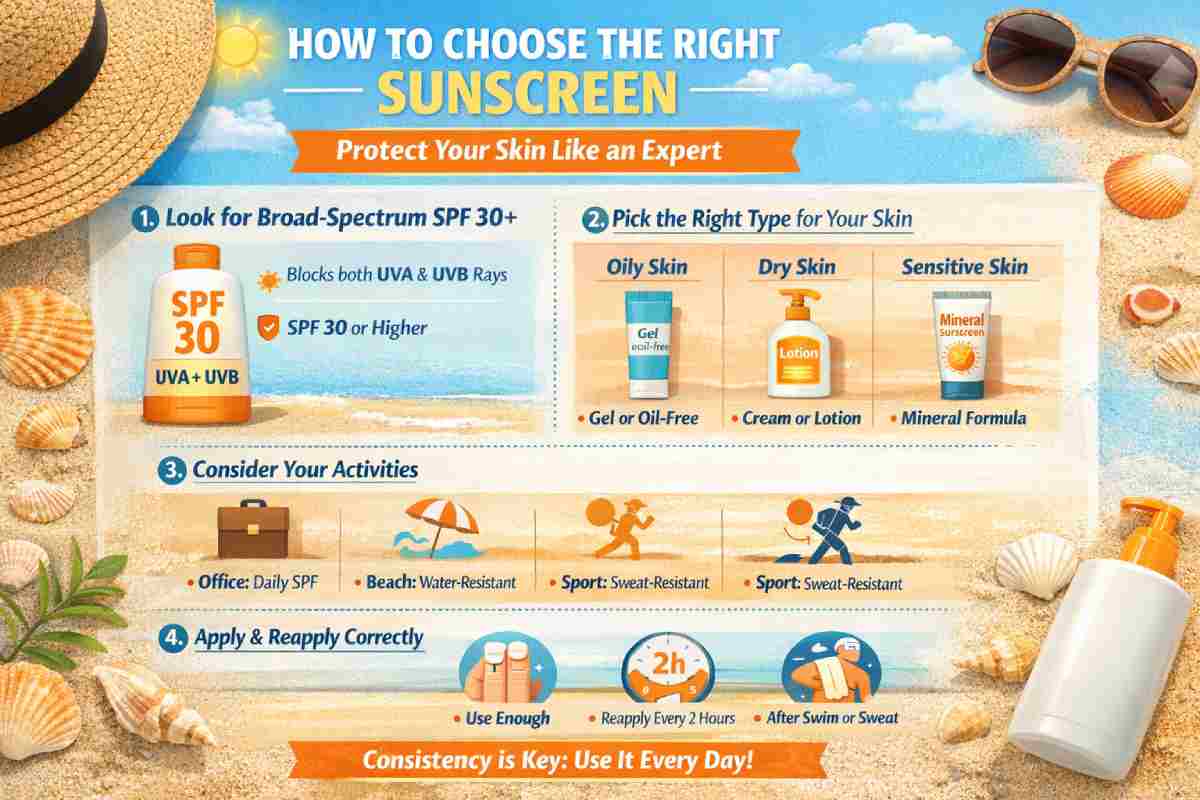
Choose a broad-spectrum sunscreen with SPF 30 or higher that suits your skin type and lifestyle—and apply enough of it consistently.
That sounds simple, but sunscreen labels, ingredient debates, and marketing claims make the decision much more confusing than it should be. This article explains the science behind sunscreen protection and provides practical guidance so you can make informed choices.
Guidelines from organizations like the American Academy of Dermatology and the World Health Organization consistently emphasize that sun protection is one of the most effective ways to reduce skin cancer risk and prevent premature skin aging.
Table of Contents
Why Sunscreen Advice Is Often Misleading
Many sunscreen guides follow a similar structure: explain SPF, describe ingredients, and recommend products. While these explanations are useful, they often fail to explain why sunscreen works and how to choose the right type for your skin.
Sun exposure affects skin in multiple ways. It damages DNA inside skin cells and gradually weakens structural proteins such as collagen and elastin. Over time, this leads to visible aging and increases the risk of diseases such as:
-
Melanoma
-
Basal Cell Carcinoma
-
Squamous Cell Carcinoma
Research referenced by organizations like the Skin Cancer Foundation shows that consistent sunscreen use significantly lowers these risks.
However, sunscreen only works well if three conditions are met:
-
The sunscreen offers proper protection
-
It is applied in sufficient quantity
-
It is reapplied during prolonged sun exposure
Understanding the science behind sunscreen helps ensure these conditions are met.
Understanding UV Radiation and Skin Damage
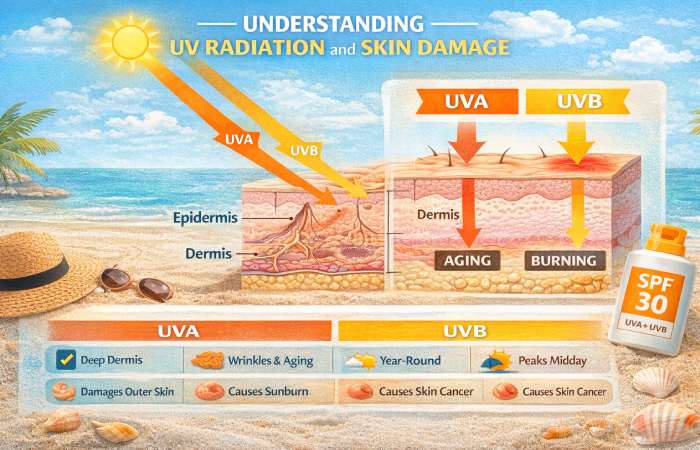
Sunlight contains different types of radiation. Two of them—UVA and UVB—have the greatest impact on skin health.
UVA vs UVB Radiation
| Radiation Type | Skin Impact | Key Characteristics |
|---|---|---|
| UVA | Causes wrinkles and skin aging | Penetrates deep into skin layers |
| UVB | Causes sunburn | Affects outer skin layer |
| UVA + UVB | Increase skin cancer risk | Both damage skin DNA |
UVA radiation is particularly concerning because it penetrates deeper into the skin and contributes to long-term aging and pigmentation problems.
Why Daily UV Exposure Matters
Many people believe sunscreen is necessary only during beach vacations or outdoor sports. In reality, UV radiation is present even on cloudy days.
| Situation | UV Exposure Level |
|---|---|
| Sunny outdoor day | Very high |
| Cloudy day | Moderate |
| Indoors near windows | Low but consistent |
| Driving or commuting | Moderate over time |
UVA rays can penetrate clouds and glass, which means daily exposure gradually accumulates even when you are not actively sunbathing.
What SPF Actually Means
SPF stands for Sun Protection Factor, but the term is frequently misunderstood.
SPF measures how effectively a sunscreen protects against UVB rays, the radiation responsible for sunburn.
SPF Protection Comparison
| SPF | Approximate UVB Protection | Real-World Difference |
|---|---|---|
| SPF 15 | ~93% | Basic protection |
| SPF 30 | ~97% | Recommended minimum |
| SPF 50 | ~98% | Slightly higher protection |
| SPF 100 | ~99% | Minimal improvement |
The difference between SPF 30 and SPF 100 is much smaller than marketing suggests.
Dermatologists usually recommend SPF 30 or higher for everyday use because it provides strong protection without the false sense of security that extremely high SPF values may create.
Why Real-World SPF Is Lower
SPF testing assumes ideal conditions that rarely occur in daily life.
| Common Mistake | Effect on Protection |
|---|---|
| Applying too little sunscreen | Reduces SPF dramatically |
| Missing areas (ears, neck) | Leaves skin exposed |
| Sweating or swimming | Removes sunscreen layer |
| Not reapplying | Protection declines over time |
Many dermatologists estimate that people apply only 25–50% of the recommended amount, which significantly reduces actual protection.
Mineral vs Chemical Sunscreens
Sunscreens are generally categorized into two types based on their active ingredients.
Mineral Sunscreens
Mineral sunscreens use ingredients such as:
-
Zinc Oxide
-
Titanium Dioxide
These ingredients reflect and absorb UV radiation.
| Advantages | Limitations |
|---|---|
| Gentle on sensitive skin | May leave white cast |
| Stable under sunlight | Can feel thicker |
| Often recommended for children | Less cosmetically elegant |
Mineral sunscreens are widely recommended for individuals with sensitive or reactive skin.
Chemical Sunscreens
Chemical sunscreens absorb UV radiation and convert it into heat.
Common ingredients include:
-
Avobenzone
-
Octocrylene
-
Oxybenzone
| Advantages | Limitations |
|---|---|
| Lightweight texture | May irritate sensitive skin |
| Invisible finish | Some ingredients controversial |
| Easy to layer with makeup | Requires time to absorb |
Chemical sunscreens are popular for daily wear because they tend to feel lighter and blend better into the skin.
Hybrid Sunscreens
Many modern formulations combine mineral and chemical filters.
| Benefit | Explanation |
|---|---|
| Balanced protection | Combines strengths of both filter types |
| Improved texture | Less heavy than pure mineral formulas |
| Better UVA coverage | Multiple filters work together |
Hybrid sunscreens are increasingly common in global skincare markets.
Choosing Sunscreen Based on Skin Type
Selecting the right sunscreen often depends on your skin type.
| Skin Type | Recommended Sunscreen Type |
|---|---|
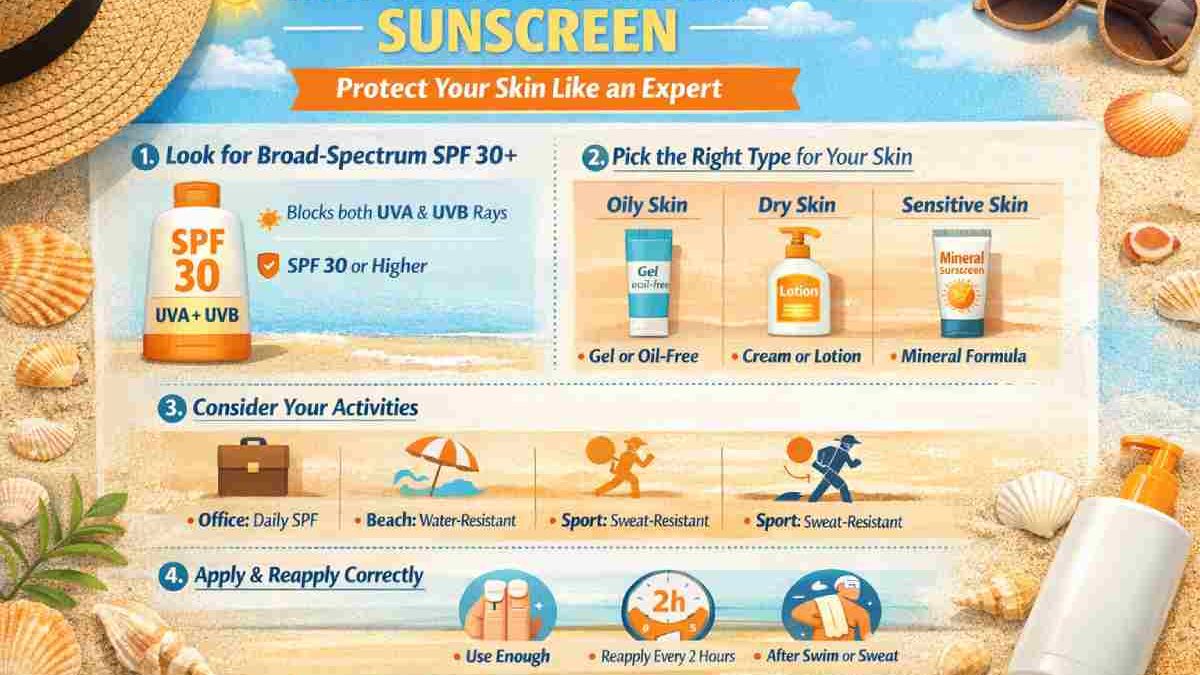
| Oily skin | Gel or lightweight fluid |
| Dry skin | Cream or lotion with moisturizers |
| Sensitive skin | Mineral sunscreen |
| Acne-prone skin | Non-comedogenic formulas |
Choosing a formula that feels comfortable on your skin increases the likelihood that you will use sunscreen consistently, which is ultimately the most important factor.
Choosing Sunscreen Based on Lifestyle
Lifestyle and environment also influence sunscreen needs.
| Lifestyle Scenario | Sunscreen Recommendation |
|---|---|
| Office worker indoors | Lightweight daily SPF 30 |
| Outdoor sports | Water-resistant SPF 50 |
| Beach vacation | Frequent reapplication |
| Tropical climates | Sweat-resistant formulas |
In hot or humid environments, heavier creams may feel uncomfortable, making lightweight formulations more practical.
Global Differences in Sunscreen Technology
Sunscreen regulation varies significantly across regions.
| Region | Regulatory Approach |
|---|---|
| United States | Sunscreens regulated as drugs |
| European Union | Cosmetic regulation with more filter options |
| Asia (Japan/Korea) | Advanced formulations and UVA filters |
Because of these regulatory differences, some dermatologists believe European and Asian sunscreens often provide more advanced UVA protection.
New-Generation UV Filters
Examples of modern UV filters include:
-
Tinosorb S
-
Tinosorb M
These filters provide broader UVA coverage and greater photostability.
Scientific evaluations from organizations such as the European Commission Scientific Committee on Consumer Safety have reviewed their effectiveness and safety.
How to Apply Sunscreen Correctly
Even the best sunscreen fails when applied incorrectly.
Recommended Application Amount
| Area | Amount |
|---|---|
| Face | Two finger lengths |
| Full body | One shot-glass amount |
| Arms | About one teaspoon each |
| Legs | About two teaspoons each |
Applying the correct amount ensures the sunscreen delivers the SPF protection stated on the label.
When to Reapply Sunscreen
| Situation | Reapplication Timing |
|---|---|
| Outdoor activity | Every 2 hours |
| Swimming | After leaving water |
| Sweating heavily | Immediately after |
| Towel drying | Reapply |
No sunscreen is completely waterproof, so reapplication is essential.
Common Sunscreen Myths
Myth vs Reality
| Myth | Reality |
|---|---|
| Dark skin does not need sunscreen | UV damage still occurs |
| SPF 100 is dramatically stronger | Difference from SPF 30 is small |
| Sunscreen blocks vitamin D completely | Real-world use rarely prevents vitamin D production |
| Sunscreen lasts all day | Reapplication is necessary |
Misunderstanding these myths often leads to poor sun protection habits.
Sunscreen and Long-Term Skin Health
Consistent sunscreen use provides several benefits beyond preventing sunburn.
| Benefit | Explanation |
|---|---|
| Reduced skin cancer risk | Protects DNA from UV damage |
| Slower skin aging | Prevents collagen breakdown |
| Fewer dark spots | Reduces pigmentation triggered by sunlight |
| Healthier skin barrier | Limits long-term UV stress |
Studies referenced by the American Academy of Dermatology and the Skin Cancer Foundation confirm that daily sunscreen use significantly reduces cumulative sun damage.
Quick Sunscreen Selection Checklist
| Question | Ideal Answer |
|---|---|
| Is it SPF 30 or higher? | Yes |
| Is it broad-spectrum? | Yes |
| Does it suit your skin type? | Yes |
| Will you use it daily? | Yes |
| Is it comfortable to apply? | Yes |
If a sunscreen meets these criteria, it is likely a good choice.
Final Perspective: The Most Important Sunscreen Decision
The biggest mistake people make when choosing sunscreen is focusing too much on brand names or marketing claims.
In reality, the most important factors are simple:
-
consistent application
-
sufficient quantity
-
regular reapplication
Dermatology guidelines from organizations like the World Health Organization and the American Academy of Dermatology emphasize that consistent sun protection is one of the most effective ways to protect skin health throughout life.
Instead of searching endlessly for the “perfect” sunscreen, choose a formula that fits your skin type, climate, and lifestyle—and use it every day.